Direct Answer: Which Payment Method Costs Less for Merchants?
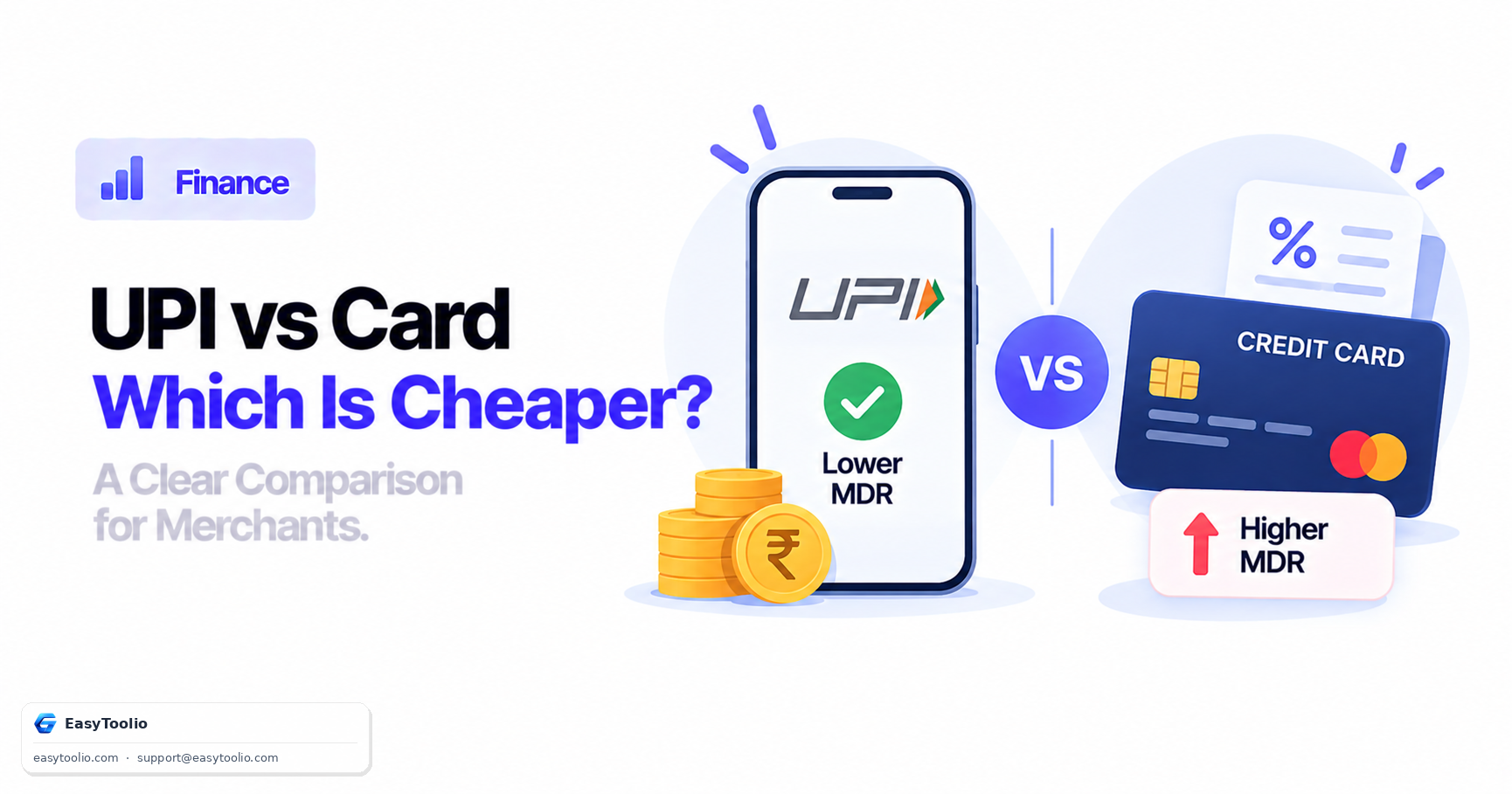
Even with the introduction of the 0.4% MDR framework on 15 October 2026, UPI remains drastically cheaper than credit cards and debit cards for merchants of all sizes. Below ₹2,000, UPI is completely free (0%), while for large transactions, UPI's ₹300 hard cap saves businesses thousands of rupees per high-ticket sale.
Side-by-Side MDR Fee Comparison (2026)
| Payment Method | Rate on ≤ ₹2,000 | Rate on > ₹2,000 | Fee Cap | Cost on ₹1,00,000 Sale |
|---|---|---|---|---|
| UPI (New 2026 Rule) | 0.00% (Free) | 0.40% | ₹300 Max | ₹300 |
| RuPay Debit Card | 0.00% (Subsidized) | 0.00% - 0.40% | Varies | ₹0 - ₹400 |
| Visa / Mastercard Debit | 0.40% - 0.90% | 0.90% | ₹1,000 Cap | ₹900 |
| Credit Card (Domestic) | 1.50% - 2.00% | 1.50% - 2.50% | No Cap | ₹2,000 - ₹2,500 |
How the ₹300 Cap Changes the Effective Rate at Higher Ticket Sizes
Because the fee is capped at ₹300 regardless of transaction size, UPI's effective rate falls the larger the transaction gets — the opposite of a flat-percentage card fee:
| Transaction Amount | UPI MDR Paid | UPI Effective Rate | Credit Card Fee (~2%) |
|---|---|---|---|
| ₹75,000 | ₹300 | 0.40% | ₹1,500 |
| ₹1,50,000 | ₹300 | 0.20% | ₹3,000 |
| ₹3,00,000 | ₹300 | 0.10% | ₹6,000 |
| ₹5,00,000 | ₹300 | 0.06% | ₹10,000 |
Why the ₹300 Cap Is a Game-Changer for High-Value Sales
For electronics retailers, jewelers, auto dealers, and coaching institutes accepting high-value payments, accepting a credit card swipe on a ₹1,00,000 transaction costs ₹2,000 to ₹2,500 in processing fees. The same transaction processed through UPI costs exactly ₹300, resulting in an immediate saving of over 85% in payment gateway expenses.
Capital Markets: UPI vs Broker Payment Gateways
For mutual fund and brokerage payments, UPI's 0.02% rate (capped at ₹300) undercuts most third-party payment gateway charges used for net-banking or card-based investment funding, which commonly run 0.5%–2% plus GST — one reason most fintech investment apps default to UPI as the primary funding rail.
Essential-Sector Flat Fee vs Card Swipe Fee
For railways, telecom, insurance, fuel, and agricultural-input merchants, the flat ₹5 UPI fee on any bill above ₹2000 is dramatically cheaper than card MDR, which scales with bill size — a ₹1,00,000 insurance premium costs ₹5 via UPI versus ₹1,500–₹2,500 on a credit card.
Run Your Numbers Online
Compare transaction costs and calculate net settlement values with our UPI MDR Calculator.
Frequently Asked Questions
Is UPI still cheaper than RuPay debit cards? Broadly comparable at smaller amounts since RuPay debit MDR is also subsidised or zero in most cases, but UPI's hard ₹300 cap gives it a clear edge on large-ticket transactions where card fees scale uncapped.
Do net-banking payments have the same MDR as UPI? No — net-banking gateway fees are set independently by banks and payment aggregators and are not governed by this UPI MDR framework.
Should merchants push customers toward UPI over cards now? For most ticket sizes, yes — UPI remains cheaper than card MDR even after this change, especially above ₹75,000 where the ₹300 cap makes the effective rate drop well below any card scheme.
Related Reading
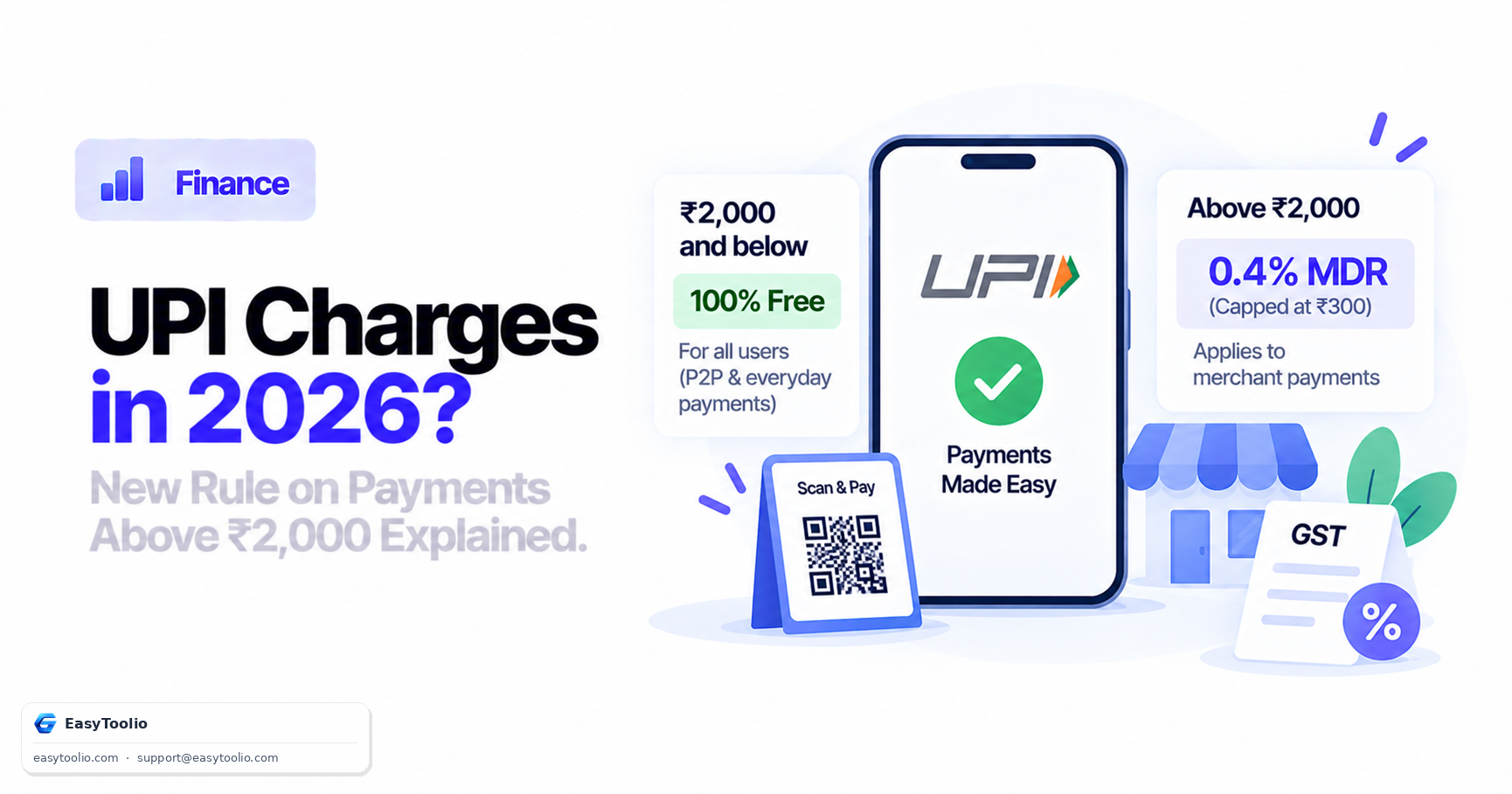
- UPI Charges 2026: New Rule on Payments Above ₹2,000 Explained
- UPI MDR for Shopkeepers: How Much Will You Actually Pay Now?
- Is UPI Still Free? What the New MDR Rule Means for You
Comparative Benchmark & Policy Notice: Based on the Ministry of Finance and NPCI notification dated 15 September 2026 (effective 15 October 2026). Last verified against official sources on 16 September 2026. Because this 0.4% UPI MDR framework and its ₹300 cap represent an evolving policy, official rates and thresholds remain subject to future revisions by regulatory authorities. Card MDR figures represent industry averages across major Indian acquiring banks; always confirm exact merchant pricing schedules directly with your POS aggregator or merchant bank.