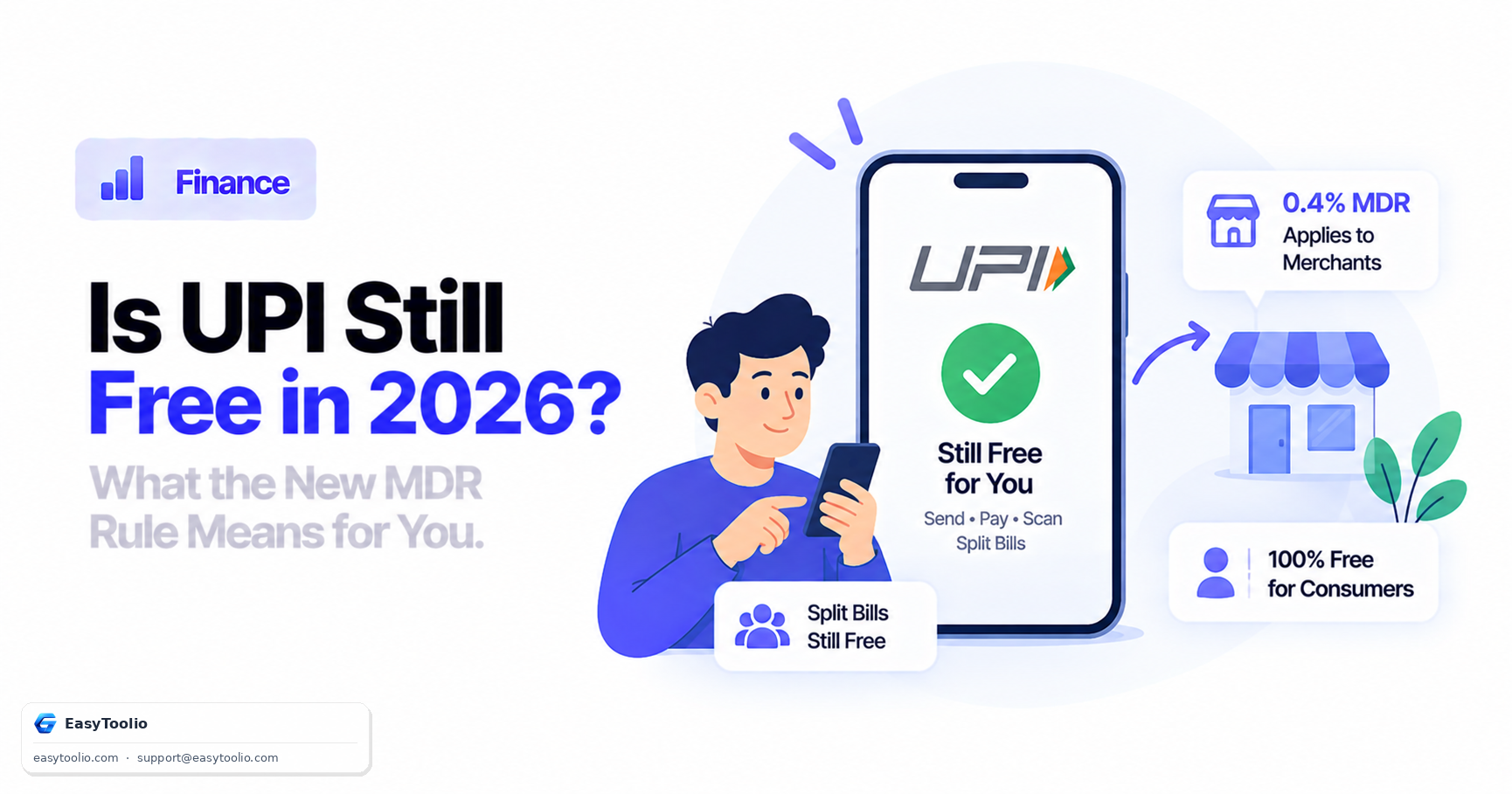
Direct Answer: Is UPI Free for Individual Users?
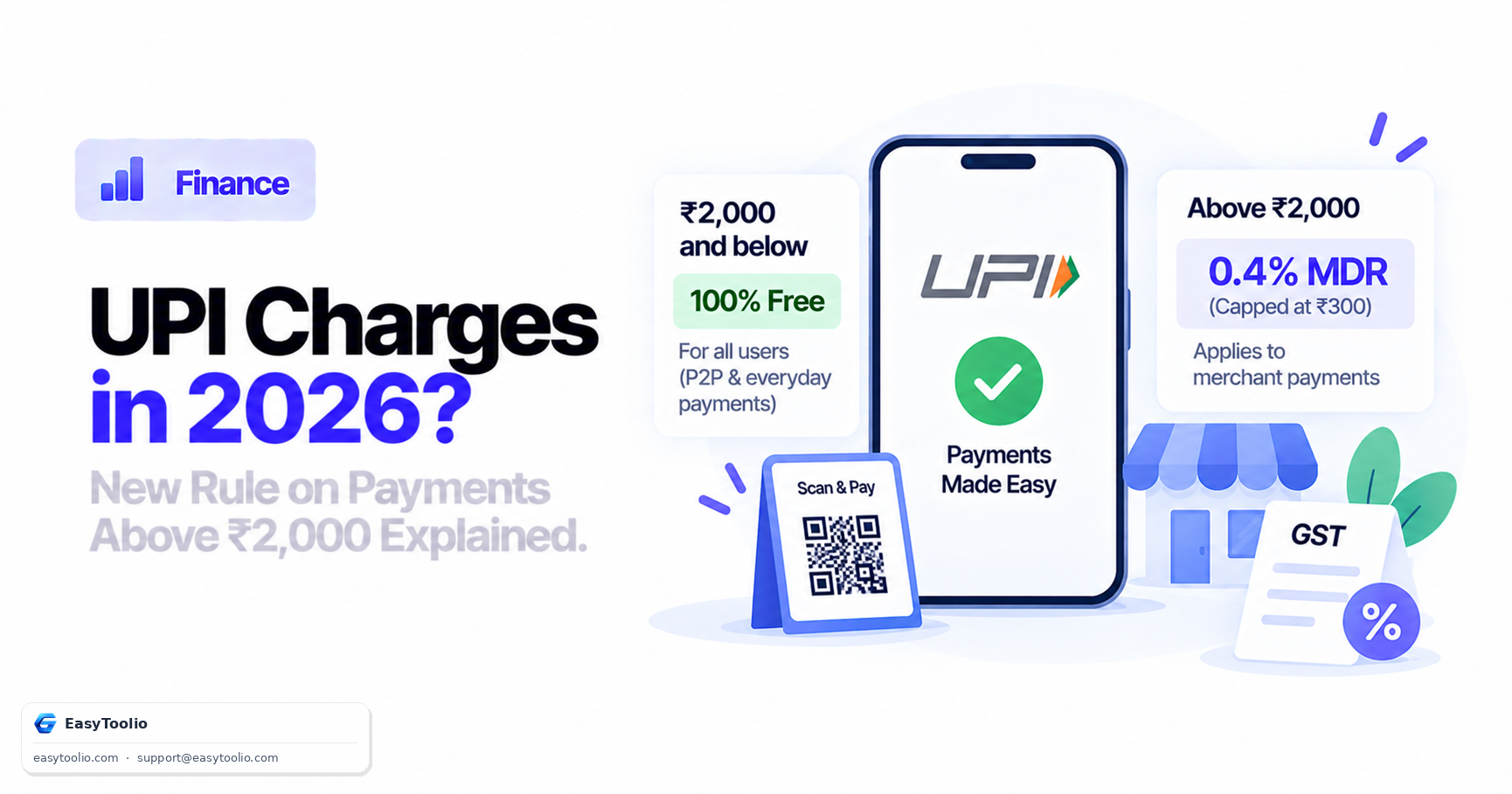
Yes, 100% free. Individual users will not pay any fee, tax, or surcharge when sending money via UPI. Whether you are sending ₹500 to a friend, splitting a dinner bill, or scanning a QR code at a supermarket for a ₹10,000 purchase, you pay only the exact amount on the bill.
What Is the New 2026 Rule About Then?
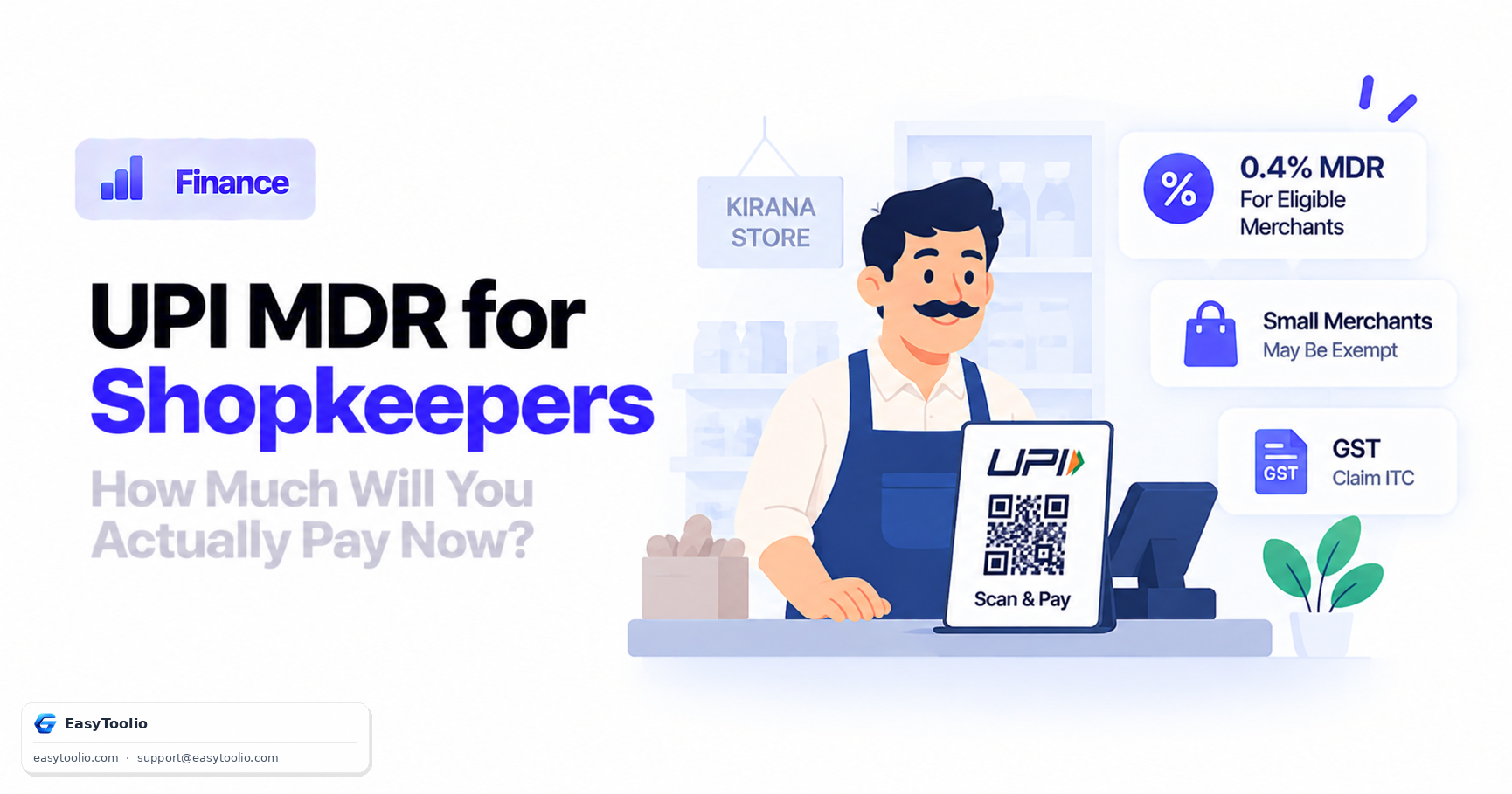
The new framework notified on 15 September 2026 introduces a Merchant Discount Rate (MDR) of 0.4% (capped at ₹300) on commercial merchant transactions exceeding ₹2,000. This is an infrastructure maintenance fee paid by commercial sellers to the banking network, identical in principle to card swipe fees, but at a fraction of credit card rates.
P2P vs P2M: The Key Difference
- Peer-to-Peer (P2P): Sending money to friends, family members, or personal phone numbers. Always 0% charge, regardless of amount.
- Peer-to-Merchant (P2M): Paying a verified business QR code or merchant terminal. 0% charge up to ₹2,000; 0.4% charge paid by the merchant above ₹2,000.
What About Bill Payments — Electricity, Insurance, Fuel?
Paying a large utility, insurance, or fuel bill via UPI QR code? These fall under the "essential sector" category, which pays a small flat ₹5 fee — but that fee is paid by the biller/merchant, never added to your bill. Whether you're paying a ₹2,000 mobile recharge or a ₹40,000 insurance premium, you pay exactly the invoice amount.
What About Buying Mutual Funds or Stocks via UPI?
Investing through UPI — a SIP top-up, a lump-sum mutual fund purchase, or funding your trading account — falls under the capital-markets rate of 0.02%, capped at ₹300, again paid by the broker or fund house, not deducted from your investment amount.
Does UPI Autopay Cost More Now?
No. Standing instructions set up through UPI Autopay — for SIPs, insurance premiums, subscriptions, or loan EMIs — are excluded from the new MDR framework entirely. Your recurring payments are unaffected.
Can a Shopkeeper Ask You to Pay Extra for UPI?
No. RBI rules strictly prohibit merchant surcharging on UPI payments. If a shopkeeper asks you to pay an extra 0.4% or ₹20 fee for paying via QR code, they are violating NPCI merchant agreements. You can report such instances to your payment app or bank.
Myth vs Fact
| Myth | Fact |
|---|---|
| "UPI now charges a fee on every payment." | False — P2P transfers and P2M payments up to ₹2000 remain completely free. |
| "Shopkeepers can add a UPI surcharge now." | False — surcharging customers for UPI remains prohibited. |
| "My SIP or insurance Autopay got more expensive." | False — Autopay mandates are exempt from the new MDR. |
| "Street vendors now have to charge extra." | False — small vendors receiving under ₹1,00,000/month via personal accounts are exempt. |
Test Any Transaction Amount
Curious how much a merchant pays on a specific transaction? Test any amount with our live UPI MDR Calculator.
Frequently Asked Questions
Will my bank app show a separate "MDR" line item on my payment? No — as a consumer you are not charged the MDR; it is deducted from the merchant's settlement, not your payment amount.
What if a shop refuses UPI and asks for cash instead because of this fee? Merchants may choose their preferred payment method, but they cannot charge you extra specifically for using UPI. If you're forced to pay a surcharge, you can report it to your payment app.
Is this rule permanent? It's a newly notified framework — treat rates and thresholds as subject to future revision and check official NPCI/Ministry of Finance sources for updates.
Related Reading
- UPI Charges 2026: New Rule on Payments Above ₹2,000 Explained
- UPI MDR for Shopkeepers: How Much Will You Actually Pay Now?
- UPI vs Card Payments 2026: Which Is Cheaper for Merchants Now?
Consumer Notice & Policy Status: This explainer reflects the Ministry of Finance and NPCI notification dated 15 September 2026, scheduled to take effect from 15 October 2026 (0.4% merchant fee capped at ₹300 on P2M > ₹2,000; P2P always free). Last verified against official sources on 16 September 2026. As this regulatory framework is newly introduced and subject to potential policy updates or clarifications, please verify the latest guidelines with official NPCI releases or your banking app before making financial commitments.